

There is a moment when you stop in front of a painting on someone’s wall and something inside you exhales. Not because you analyzed it. Not because you read the artist’s statement. Just because your nervous system recognized something it needed.
That exhale is not poetic license. It is physiology. And the research backing it up is, as of 2025, more robust than ever.
This is for the people who are burned out, overstimulated, chronically stressed, or simply trying to build a home that actually supports their health. If you have been searching for natural anxiety relief, alternative approaches to mental wellness, biophilic interior design, or wellness design ideas that go beyond candles and throw pillows — you are in the right place.
We are going to go deep into what the science actually says about art as medicine. About how paintings and fine art prints on your walls can measurably lower your cortisol levels, calm your autonomic nervous system, reduce inflammation, and shift your brain into a state of restoration. And yes, we will talk about what that means for how you design your home.
“Art doesn’t just move us emotionally — it calms the body too.”
— Dr. Tony Woods, King’s College London (2025)
The Burnout Epidemic and the Search for a Real Solution
We are living in a historic moment of collective depletion. Burnout, once considered a workplace problem, is now recognized by the World Health Organization as an occupational phenomenon with serious health consequences. Chronic stress is driving alarming rates of anxiety, depression, cardiovascular disease, and immune dysfunction.
The conventional wisdom says: take a vacation, meditate, exercise, set boundaries. And those things matter. But there is a growing body of research pointing to something that most of us have radically underestimated: the environment we live in is either healing us or hurting us, every single day. Not just in a vague, mood-board sense. In a measurable, biological sense.
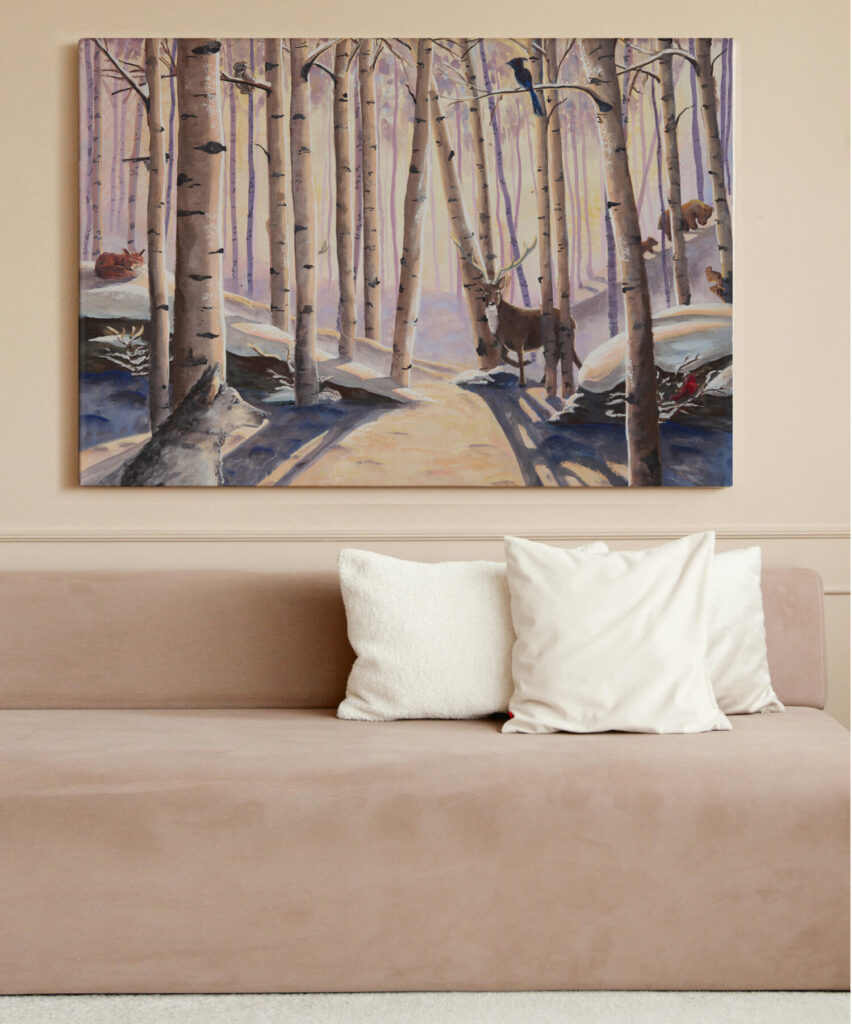
Wellness design, once a niche term used by architects of luxury spas, has entered mainstream conversation as people search for homes that actively nurture their nervous systems. Biophilic design—spaces that integrate natural elements to support physical and mental wellbeing—is reshaping how healthcare facilities, offices, and homes are built. And one of its most accessible, most beautiful expressions is original art on your walls.
What Happens in Your Body When You Look at Art
Let’s start with the endocrine system. This is the network of glands and organs that produces and regulates your hormones — including cortisol, the body’s primary stress marker. When cortisol stays chronically elevated, the consequences cascade: impaired sleep, weakened immunity, elevated blood pressure, increased risk of heart disease and metabolic disorders, and accelerated cognitive decline. Managing cortisol is not a wellness trend. It is a survival strategy.
The 22% Cortisol Drop That Changed the Conversation
In October 2025, King’s College London published what has been called the most compelling physiological evidence to date that viewing art has immediate, measurable benefits for health. The study, co-funded by Art Fund and the Psychiatry Research Trust, followed 50 adults aged 18 to 40 who viewed original masterworks by Manet, Van Gogh, and Gauguin at The Courtauld Gallery in London. A control group viewed reproductions of the same paintings in a non-gallery environment.
The findings were striking. Cortisol levels fell by an average of 22% in the group viewing original art, compared to just 8% in the reproduction group. But that was only the beginning.
Pro-inflammatory cytokines — proteins like IL-6 and TNF-alpha that rise during chronic stress and are linked to heart disease, diabetes, anxiety, and depression — dropped by 30% and 28% respectively in the original art group. The reproduction group showed no change. Heart rate variability, a key indicator of autonomic nervous system health, became more dynamic in the gallery viewers. Their skin temperature dipped, and their overall heart rate increased in brief bursts — the physiological signature of emotional arousal and simultaneous deep calm.
Dr. Tony Woods, the study’s lead author, wrote: “Art had a positive impact on three different body systems — the immune, endocrine and autonomic systems — at the same time. This is a unique finding and something we were genuinely surprised to see.”
The immune system. The endocrine system. The autonomic nervous system. All three, simultaneously, responding to an encounter with visual art. The researchers called it “a cultural workout for the body.” [1]
You Don’t Need a Museum, Your Walls Will Do
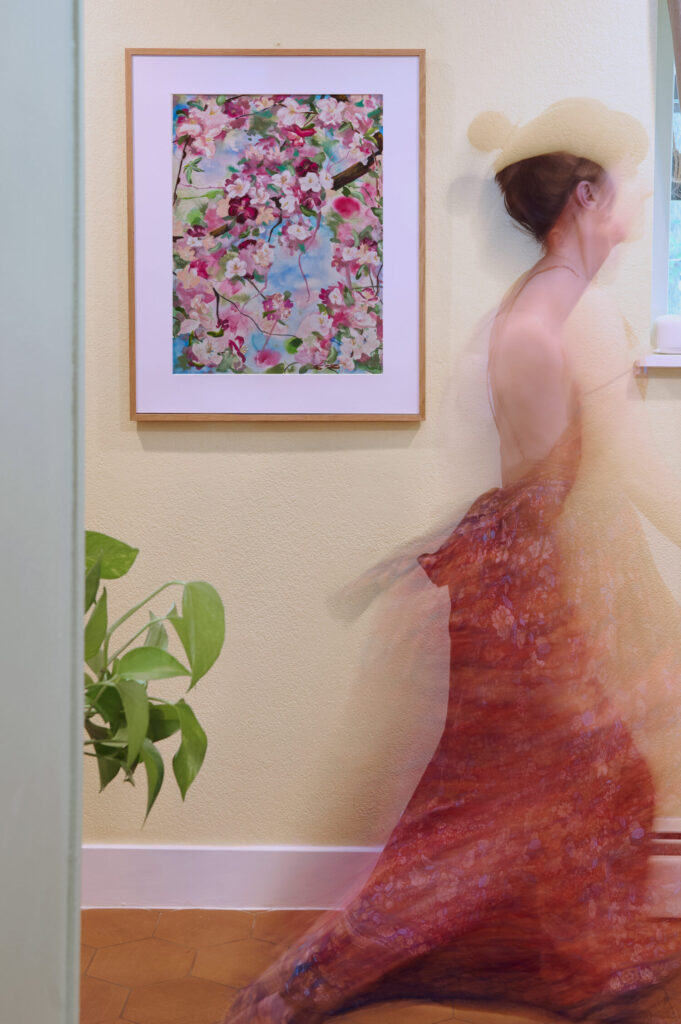
Here is what is particularly relevant for anyone building a wellness-centered home: the control group still experienced an 8% cortisol reduction from viewing reproductions. And the broader body of research suggests that consistent daily exposure to art in your own environment may be even more therapeutic than a single gallery visit because the dosage is continuous.
A 2021 scoping review published in BMJ Open examined 14 studies on the effects of viewing visual artworks on stress outcomes. Across nearly all of them, self-reported stress decreased significantly after viewing artwork. All four studies that measured systolic blood pressure found reductions. The review concluded that viewing art is one of the most promising non-pharmacological interventions for stress reduction available and called for more research into how artwork functions as “positive visual environmental enrichment.” [2]
The review concluded that viewing art is one of the most promising non-pharmacological interventions for stress reduction available
Positive visual environmental enrichment. That is what a carefully chosen piece of art on your living room wall is. Not decoration. Environmental medicine. Your walls are dosing you, one way or another. The question is whether you have chosen the medicine intentionally.
The Neuroscience of Beauty: Dopamine, Default Mode, and the Brain on Art
The endocrine system is only part of the story. What is happening in the brain when you stand before a painting you love?
Neurobiologists Semir Zeki and Tomohiro Ishizu at University College London found that when participants viewed artwork they considered beautiful, activity in the brain’s medial orbito-frontal cortex increased significantly. This is the same region activated by romantic love, music, and the experience of reward. Viewing beautiful art, in other words, produces a dopaminergic response, it triggers the same neural circuitry as falling in love. [3]
Dopamine is not just about pleasure. It is central to motivation, learning, emotional regulation, and resilience. When your brain’s reward system is consistently activated in low-stakes, restorative ways, like pausing in front of a painting you love, you are literally building neurochemical reserves that buffer against the depletion of burnout.
Viewing beautiful art, in other words, produces a dopaminergic response, it triggers the same neural circuitry as falling in love.
According to Susan Magsamen and Ivy Ross in Your Brain on Art (Johns Hopkins / NYT Bestseller), neuroscience tells us that only 5% of your mental activity is conscious. The other 95% is happening beneath the surface—your senses processing, your emotions responding, your nervous system being shaped by everything around you without your awareness. Which means your environment is medicating you whether you chose it or not. The art on your walls, the colors in your rooms, the images your eyes land on first thing in the morning, all of it is working on the 95% constantly. This is not a reason for anxiety. It is an invitation. When you consciously choose art that carries beauty, harmony, and nature into your space, you are not decorating. You are writing a prescription for your own nervous system.
Art and the Default Mode Network
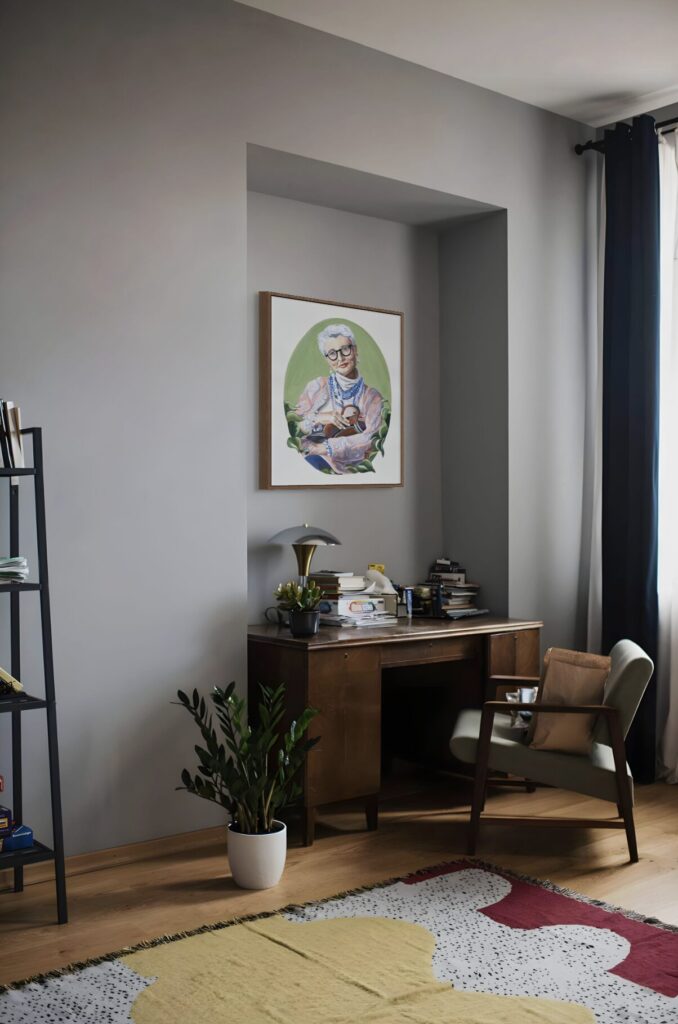
Beyond the reward system, there is something happening at the level of what neuroscientists call the Default Mode Network (DMN), the web of brain regions that activates when you are not focused on an external task. This is the network of daydreaming, reflection, self-awareness, and meaning-making. It is also the network that deactivates under chronic stress and overwork.
Spending ten seconds really looking at a painting on your wall in the morning can shift the register of your day.
Engaging with art, particularly slow, contemplative looking, activates the DMN in ways that resemble meditation. A 2024 review in Frontiers in Psychology found that creative arts modulate and regulate emotions, increase empathy and tolerance, and influence both mood and physical health through these neural pathways. [4]
This is why spending ten seconds really looking at a painting on your wall in the morning can shift the register of your day. You are not just admiring something pretty. You are activating a resting state your overstimulated brain desperately needs.
Nature, Art, and the Biophilia Response: Why Landscape Art is Especially Powerful
If art in general is medicine, nature-based art is a particularly potent formulation. And if you have ever felt an almost physical pull toward a painting of mountains, a print of wildflowers, or a landscape, your nervous system was not being dramatic. It was being accurate.
The biophilia hypothesis, originally proposed by E.O. Wilson, holds that humans have an innate biological affinity for the natural world, shaped by millions of years of evolution. We did not evolve in offices or apartment buildings. We evolved in landscapes. And our nervous systems are still calibrated to respond to them.
What the Research Shows on Nature Imagery
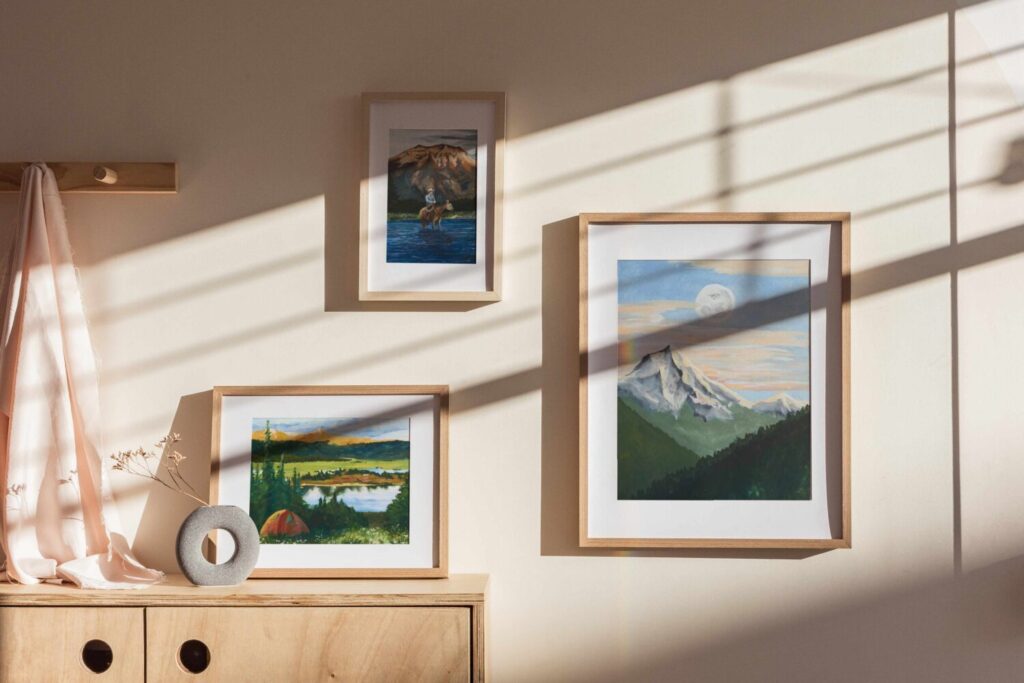
A 2021 scoping review confirmed that among all types of art content, nature imagery consistently produces the greatest stress-reducing effects. The evolutionary theory explains this: because humans evolved in natural environments, natural imagery is processed more efficiently by the brain, triggering automatic restoration responses. The Attention Restoration Theory adds that nature specifically counteracts the mental fatigue caused by directed attention; the exact kind of depletion that characterizes burnout. [2]
Research published in Nature: Scientific Reports found that even representations of nature, paintings and prints, not live landscapes, can reduce sympathetic nervous activity (the fight-or-flight response) and increase parasympathetic activity (the rest-and-digest state). Nature imagery has been shown to restore attention, lower blood pressure, reduce pain perception, and even accelerate post-surgical healing. [5]
Nature imagery has been shown to restore attention, lower blood pressure, reduce pain perception, and even accelerate post-surgical healing.
Studies have also found that images of nature with the fractal patterns found in tree branches, mountain ridge lines, ocean waves, and wildflower fields produce measurably lower stress levels. Our brains process these patterns with unusual efficiency as though they are a kind of visual mother tongue. [6]
Color and the Nervous System
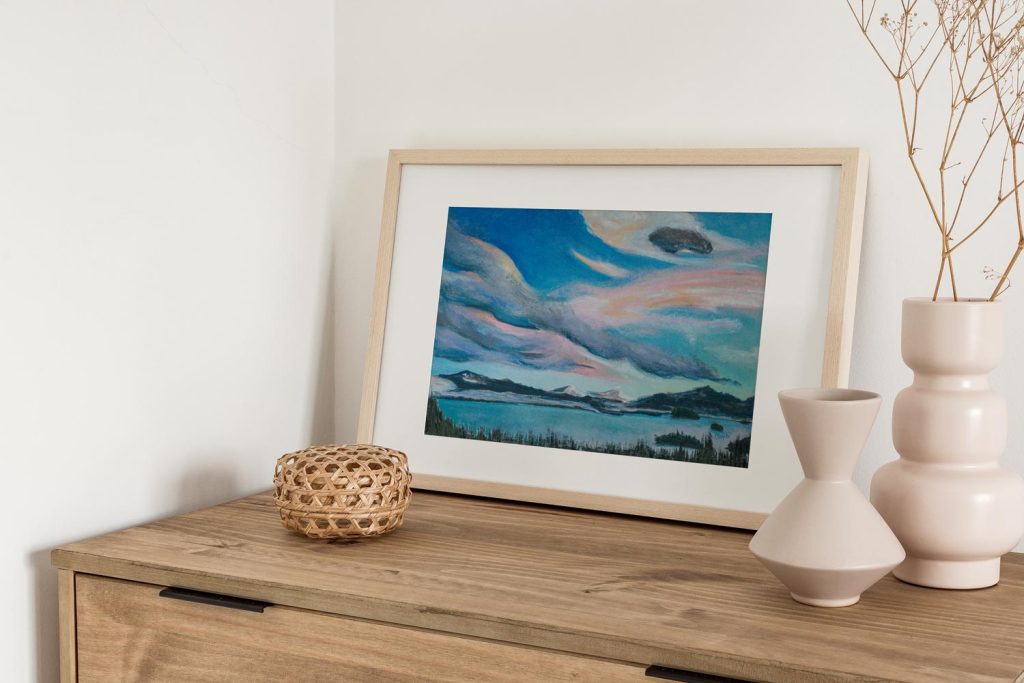
The colors that dominate nature, deep greens, blues, earth tones, soft purples, the warm gold of evening light, are not coincidentally the colors found to be most calming to the human nervous system. Research in color psychology has shown that shorter wavelength colors like blues and greens reduce anxiety and lower heart rate, while the warm tones of sunrise and sunset evoke emotional warmth without overstimulation. [6]
shorter wavelength colors like blues and greens reduce anxiety and lower heart rate, while the warm tones of sunrise and sunset evoke emotional warmth without overstimulation.
This is worth considering when choosing art for your home. A painting that carries the palette of a Colorado mountain dusk or a field of purple wildflowers is not just aesthetically pleasing. It is neurologically calibrated.
Original Art vs. Prints: What the Research Actually Says
The 2025 King’s College London study made a meaningful distinction: original art in a gallery context produced a 22% cortisol reduction, while reproductions in a clinical setting produced 8%. This gap invites a question that matters for real home decorators: does it have to be an original painting to work?
The honest answer, based on the full breadth of research, is nuanced. The physiological benefits of viewing art appear to be present across formats, what matters most is your personal resonance with the piece, its content, its color, and its emotional impact on you specifically. A fine art print of a painting that moves you will activate your reward system. A mediocre original that does nothing for you will not.
That said, there is something worth acknowledging about original paintings: they carry a quality of presence that high-quality prints approach but do not fully replicate. The texture, the materiality, the evidence of a human hand, these are part of what makes original art a full-body experience. If you can afford an original, and you find one that speaks to you, the evidence suggests your body will know the difference.
If you can afford an original, and you find one that speaks to you, the evidence suggests your body will know the difference.
High-quality fine art prints, however, particularly those printed on archival paper or canvas with professional color calibration, offer access to these benefits at a wider range of price points. The key is to choose intentionally, based on content and personal resonance rather than price or trend.
The most therapeutic art in your home will not be the most expensive piece. It will be the one you cannot stop looking at.
Designing a Home That Heals: Wellness Design Principles Anchored in Art
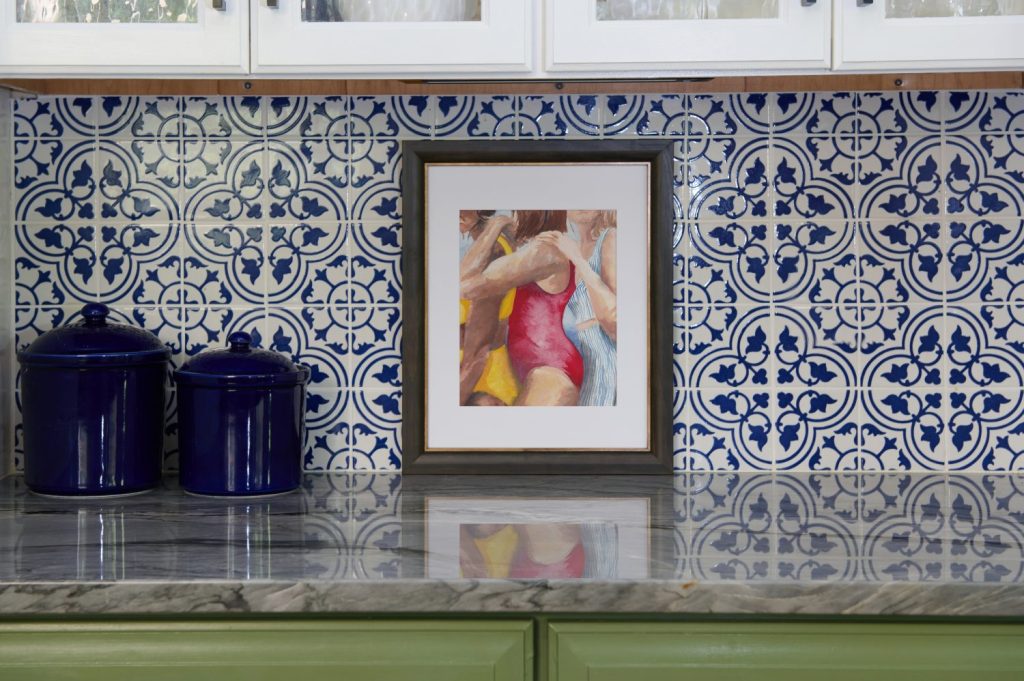
Biophilic design is no longer just a buzzword in architectural publications. It is an evidence-based approach to creating interior spaces that actively support physical and mental wellbeing. At its core, it asks: how do we bring the restorative qualities of the natural world into the spaces where we spend 90% of our time?
Art is one of biophilic design’s most powerful and flexible tools. Here is how to think about it room by room and intention by intention.
Having art in your space is one thing. Actually taking the time to experience it is another. On the Modern Magic Podcast, I explore exactly this: how to use the art in your home as an anchor for presence, a daily cue to slow down and return to yourself. Each episode is an invitation to turn a glance at your wall into a genuine moment of restoration. Check it out here.
Living Spaces: The Nervous System Reset
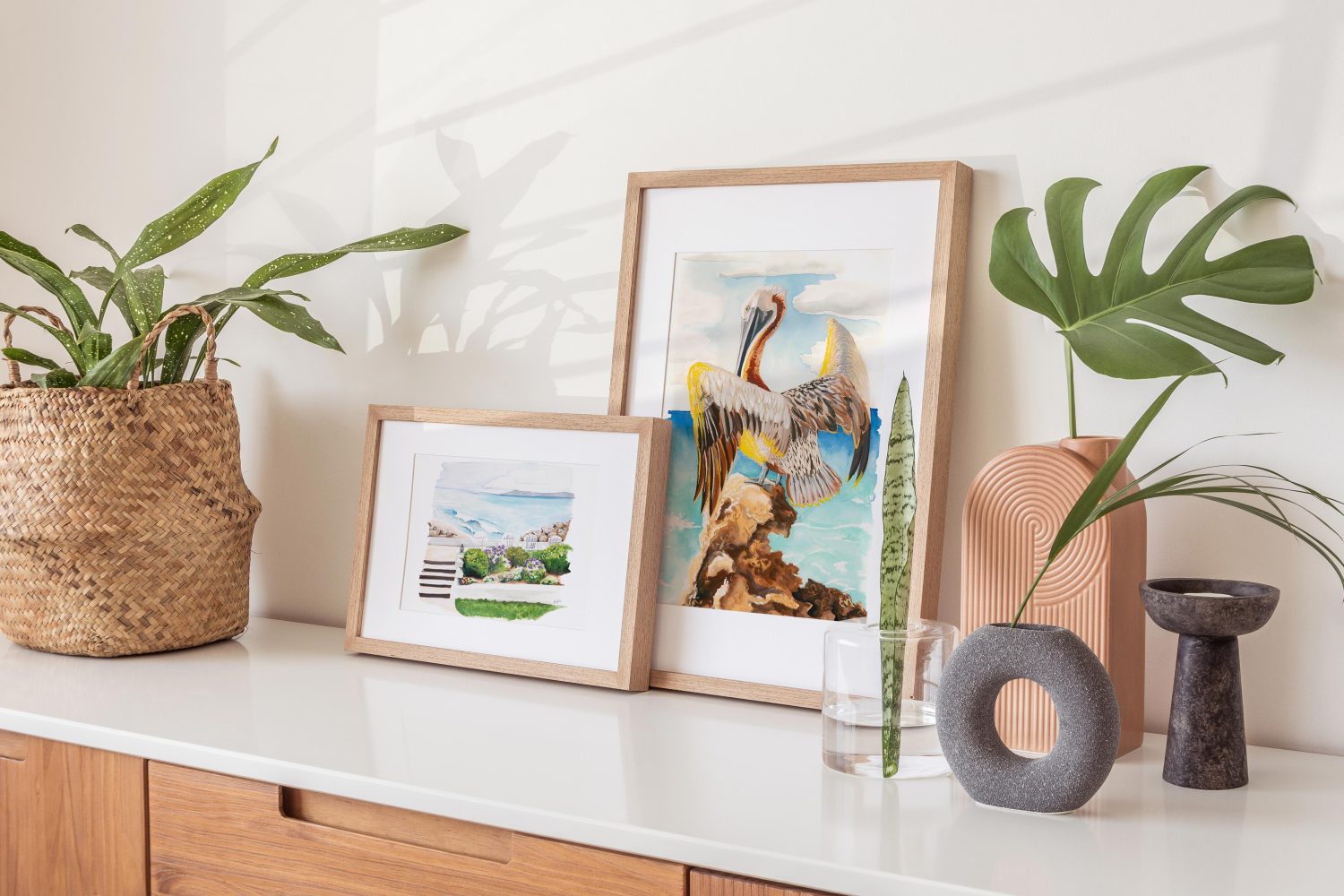
Your living room is likely where you decompress after the demands of the day. This is the space where a large-format landscape or nature-based painting does some of its best work. Research on hospital environments consistently shows that nature imagery in high-traffic recovery areas reduces patient stress, lowers pain perception, and shortens healing time. Your living room is your home’s equivalent of that space. [5]
Choose art with strong biophilic content: open landscapes, water, mountains, botanicals, animals in their natural environments. A piece that gives your eye somewhere to travel — into distance, into depth — is particularly effective because it mimics the “prospect” response, the ancestral sense of safety that comes from seeing far.
Bedrooms: Art for Sleep and Restoration
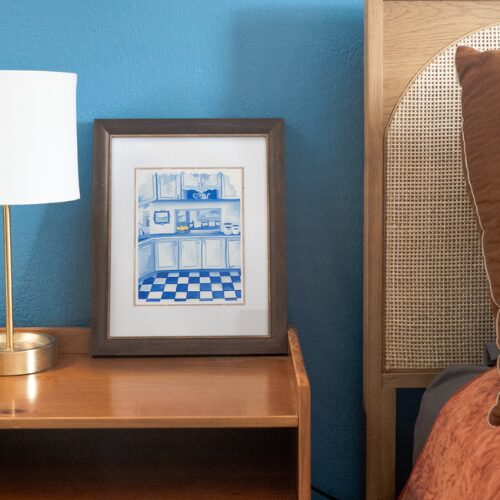
The bedroom demands a different register. The goal here is parasympathetic activation; the state of genuine rest. Research on nature imagery and sleep quality suggests that calming scenes with soft greens, blues, and warm neutrals support melatonin production and reduce pre-sleep cognitive arousal. [7]
Avoid high-contrast or visually complex pieces in the bedroom. Instead, consider something quieter — a forest floor, a meadow at dusk, wildflowers in soft afternoon light. The kind of image that, when you open your eyes in the morning, tells your nervous system that everything is okay.
Workspace: Art for Focus and Burnout Prevention
For those working from home, art in the workspace is not a luxury. Studies show that nature imagery in work environments measurably reduces burnout, enhances creativity, and improves concentration by providing the restorative micro-breaks the brain needs during sustained cognitive effort. [8]
Green tones are particularly effective in work settings. Research links green environments with enhanced creative thinking, reduced eye strain, and lower perceived stress. A painting with strong greens and botanical or landscape elements near your work area is, functionally, a performance supplement.

Entryways: Setting the Tone
The piece of art you see when you walk through your front door sets the neurological tone for everything that follows. There is good reason that hotels, hospitals, and healing spaces invest heavily in their entry art: the first visual impression affects your entire physiological state in the space.
Choose something here that represents the home you want to arrive into. Something that signals: you are safe, you are held, something beautiful is waiting.
Art as Alternative Medicine: The Emerging Evidence
The language of “alternative medicine” is shifting. What was once considered soft, experiential, or anecdotal is increasingly supported by the kind of hard physiological data that gets published in major journals. Art therapy is a recognized clinical modality used in the treatment of PTSD, depression, anxiety, and chronic pain. But you do not need a therapist for the passive benefits to accrue.
What researchers call the “environmental therapy effect” describes the cumulative, constant influence of visual environment on emotional baseline. Surrounding yourself with art that resonates, particularly art rooted in nature and beauty, creates an ambient therapeutic presence that compounds over time. It does not require a session. It just requires a wall. [9]
Hospitals that have integrated nature art into patient rooms report faster recovery times, lower pain medication use, and reduced length of stay. Schools with biophilic design elements see improved academic performance and lower behavioral incidents. Corporations investing in art-rich environments measure reduced absenteeism and higher engagement.
Your home is the most intimate of these environments. You are there longer, more vulnerably, more completely than anywhere else. What is on your walls is working on you around the clock.
Surrounding yourself with intentional beauty is not escapism. It is essential medicine for the soul.
The Other Side of the Medicine: Making Art Yourself
Everything above is about the healing power of looking at art. But there is an equally significant body of research on what happens when you make it — and it points to a kind of restoration that goes even deeper.
Magsamen and Ross cite this in Your Brain on Art alongside another finding that stops people in their tracks: just one art experience per month can extend your life by ten years. The medicine does not require mastery. It does not require talent. It requires only showing up.
A landmark 2016 study from Drexel University found that 75% of participants experienced measurable reductions in cortisol after just 45 minutes of art-making. Crucially, the effect had nothing to do with skill level. Beginners and experienced artists benefited equally. The key was simply the act of creation: freeform, self-directed, in a supported space. [10]
The research on why is illuminating. Making art activates the dopaminergic, noradrenergic, and serotonergic systems simultaneously — the neurochemical constellation of mood regulation, motivation, and creative flexibility. It shifts the brain from the default mode of rumination into a state of focused flow. It externalizes internal experience, making it visible and therefore more workable. And it bypasses the verbal, analytical mind, giving the parts of you that cannot be reached by talk therapy a language they understand.
This is not new information to anyone who has ever lost themselves in drawing, painting, collage, or any creative act. What is new is that we now have the biology to explain the transformation they have always described.
Starting Your Own Creative Practice
If you are reading this and feeling the pull to create something yourself, I want to encourage that impulse. I have written about how to begin a creative practice from the ground up, particularly for those who believe they “are not creative” or who gave up art somewhere in their journey toward responsible adulthood.
You can find that guide here: Start Your Own Creative Practice. It is for the people who need permission.
Learn With Me: Modern Magic Creative Spark Workshops
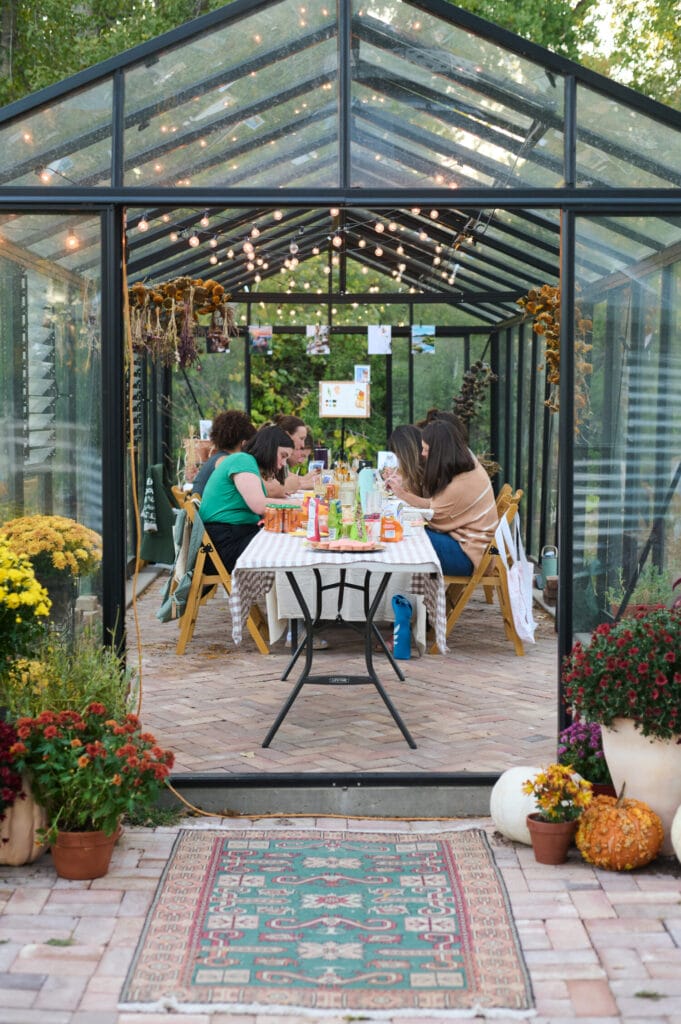
For those who want to move from theory to practice in the company of others, I offer gouache painting workshops through Modern Magic Decor. Gouache is one of the most accessible, forgiving, and rewarding painting mediums — opaque watercolor that dries quickly, corrects easily, and produces work that is genuinely beautiful even in the hands of a first-timer.
My workshops are designed for people who are not “artists” in the traditional sense. They are designed for people who need a different kind of stillness. Who are burned out, over-scheduled, or simply hungry for a creative outlet rooted in something real. We paint landscapes, botanicals, animals; the natural world that research tells us our nervous systems crave.
The act of learning to see deeply enough to paint a mountain or a field of wildflowers does something to you. You start noticing light differently. You start looking at the world around you the way art teaches you to look at it with attention, with curiosity, with the understanding that everything worth seeing requires slowing down.
You can find current workshop dates and registration at shopmodernmagic.com.
Building Your Personal Art Pharmacy: Where to Start
If you have read this far, you are probably already rethinking your walls. Here are the principles I would offer to anyone beginning to curate their home as a place of healing.
- Start with the room where you feel most depleted. Is it your bedroom, where sleep doesn’t come easily? Your home office, where burnout sets in by Wednesday? Your living room, where you crash and still somehow don’t recover? Begin there.
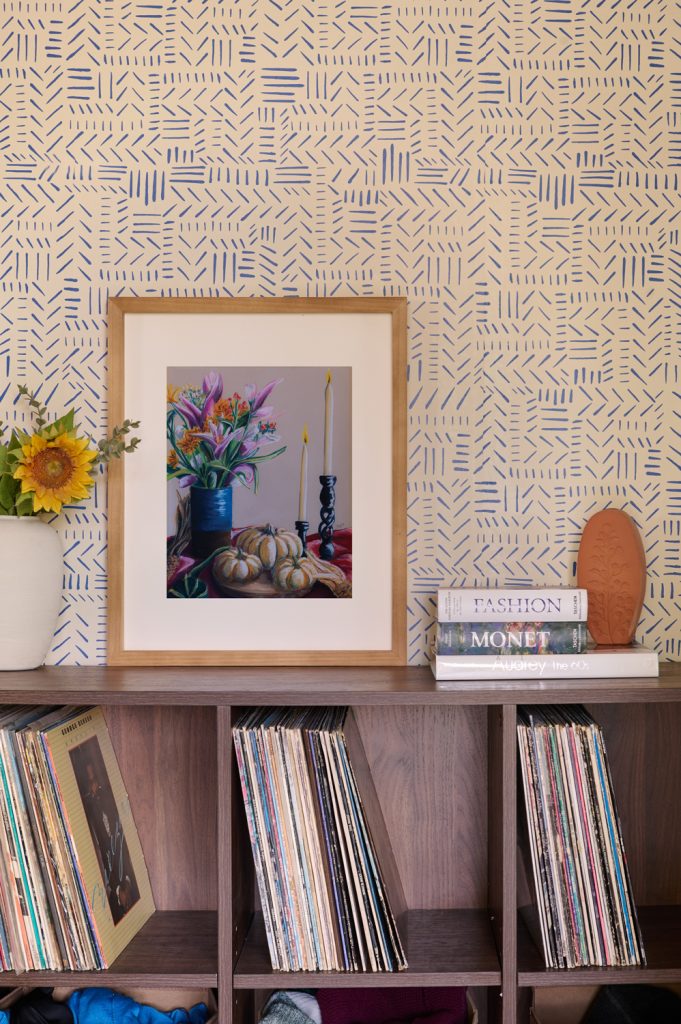
- Choose art that genuinely moves you. Not what is trending, not what matches your sofa. The art that activates your nervous system’s response is the art that speaks to something pre-rational in you. Trust that response.
- Prioritize nature content. Landscapes, botanicals, animals, water, sky, mountains, forests. The research is consistent: nature imagery provides the deepest and most reliable stress response across populations, regardless of background or aesthetic preference. You can also shop by feeling at Modern Magic–Calm, Grounded, and Empowered.
- Invest in quality. A few pieces that truly resonate, printed or painted with care and depth, will do more for your wellbeing than a wall covered in trend-driven art that does nothing to you personally. You are building a practice of daily restoration. It deserves intention.
- Consider original art. The 2025 King’s College research is the most recent in a growing body of evidence that original works carry a quality that reproductions approach but don’t fully match. If an original is accessible to you, the investment is literally one in your health.
And for the moments when your walls alone are not enough, when you need to do something with your hands, to make something, to find your way back to yourself through creation, remember that option too is a form of medicine. One with decades of research behind it. One that requires nothing more than a brush, some paint, and permission.
Katie Jackson is a Colorado artist, painter, and workshop instructor. Her original paintings and fine art prints that explore everyday magic and the intersection of the divine feminine and nature are available at shopmodernmagic.com.
If You Want to Go Deeper: Recommended Reading
The science in this post only scratches the surface. These three books have shaped my thinking on art, creativity, and the inner life:
- Your Brain on Art by Susan Magsamen & Ivy Ross — The definitive accessible guide to neuroaesthetics. Peer-reviewed science written for real humans. Start here.
- Looking at Mindfulness by Christophe Andre — A French psychiatrist uses twenty-five paintings to teach mindfulness practices. One of the most quietly radical books I own.
- What We Ache For by Oriah Mountain Dreamer — Not science, but soul. On creativity as a path back to your deepest self. For the moments when the research isn’t what you need and the poetry is.
Sources
[1] Woods, T. et al. (2025). The Physiological Impact of Viewing Original Artworks vs. Reprints: A Comparative Study. King’s College London / Art Fund / Psychiatry Research Trust. artfund.org
[2] Mason, V. et al. (2021). Evidence for the effects of viewing visual artworks on stress outcomes: a scoping review. BMJ Open. PMC8246362
[3] Ishizu, T. & Zeki, S. (2011). Toward A Brain-Based Theory of Beauty. PLOS ONE. University College London.
[4] How the arts heal: a review of the neural mechanisms behind the therapeutic effects of creative arts on mental and physical health. (2024). Frontiers in Psychology. PMC11480958
[5] Ulrich, R.S. et al. Evidence-based environmental design for improving medical outcomes. Healing by Design: 2009 Conference Proceedings; and: Kuo, F.E. Nature-deficit disorder. Multiple studies cited in Environmental Health Perspectives.
[6] Taylor, R.P. et al. Perceptual and physiological responses to Jackson Pollock’s fractals. Nonlinear Dynamics, Psychology, and Life Sciences. Multiple color psychology studies referenced in biophilic design literature.
[7] Healthy Dwelling: Design of Biophilic Interior Environments Fostering Self-Care Practices. PMC8871637
[8] Biophilic design reduces burnout and enhances creativity: multiple workplace studies. See: University of Exeter, Wellbeing in the Workplace; and UCA Arts & Design Research.
[9] Ilu Art Therapy / Environmental therapy effect: iluarttherapy.com. Supporting references in environmental psychology literature.
[10] Kaimal, G., Ray, K., & Muniz, J. (2016). Reduction of Cortisol Levels and Participants’ Responses Following Art Making. Art Therapy: Journal of the American Art Therapy Association, 33(2), 74-80.